Spare rooms and hotel rooms: what a decade of Texas data recorded
Economists traced how short-term home rentals affected hotel revenue across Texas. The effect was measurable but uneven, and it says more about markets than about hosts.
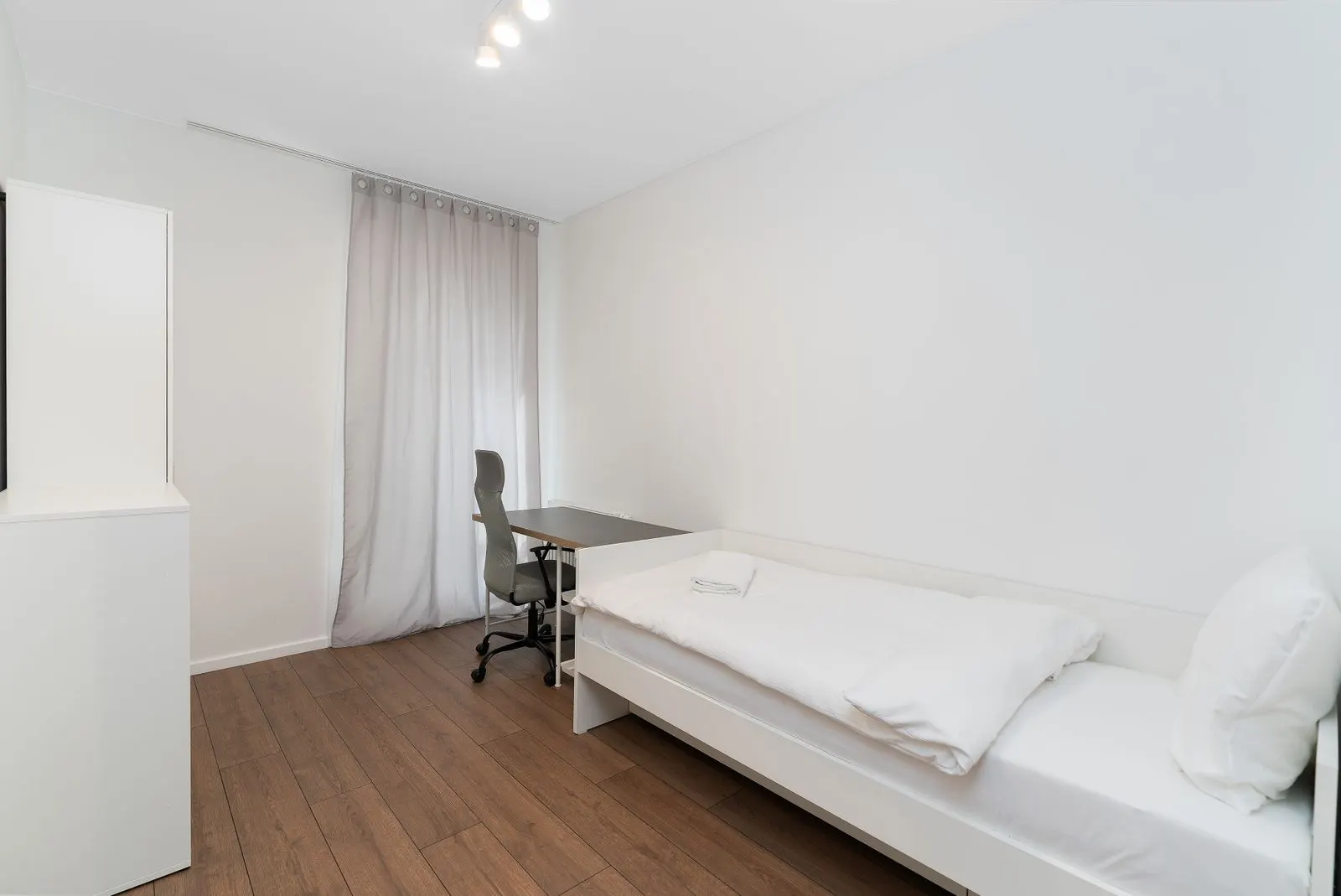
When a household lists a guest room on a home-sharing site, the transaction looks private: one host, one traveler, a few nights. Added up across a city, though, those listings form a supply of short-term lodging that competes with hotels. A group of researchers set out to measure how large that competition had become, using Texas as the test case.
Measuring a new kind of supply
Georgios Zervas, Davide Proserpio and John Byers followed the entry of one large home-sharing platform into Texas and tracked the state's hotel industry over roughly the following decade. Their study, published in the Journal of Marketing Research in 2017, compared hotel revenue in areas where listings grew quickly with areas where they grew slowly or not at all, while controlling for hotel supply, local demand and demographic change.
The headline estimate came from Austin, the city with the largest concentration of listings. There, the authors put the causal impact on hotel revenue in the range of 8 to 10 percent. The effect was not spread evenly. Lower-priced hotels and hotels that did not cater to business travelers absorbed most of it, which fits the idea that a spare room competes with a budget room more directly than with a conference hotel.
The mechanism was mainly price. Rather than losing large numbers of guests, hotels in affected areas raised room rates less aggressively than they otherwise would have. The authors noted that this benefits every traveler, including people who never book a private home. The price response was strongest during peaks in demand, such as a major annual festival in Austin, when hotels normally have the most pricing power. Peer-to-peer supply, unlike a new hotel, can appear for a single weekend and disappear afterward.
Where the estimate is fragile
The study's design asks a lot of its data. Platform supply in each area had to be estimated from listing information rather than taken from an official count, and the comparison assumes that areas with fast and slow listing growth would otherwise have followed similar hotel trends. The authors tested alternative market definitions and a matching approach, but those checks narrow uncertainty rather than remove it. Magnitudes reported in earlier working-paper versions of the research also differed from the published figures, a reminder that estimates of this kind move as specifications change.
Texas is a single state with its own mix of cities, events and regulation. The findings say nothing direct about how much hosts themselves earned, what their costs were, or how often their rooms stood empty.
Who was on the other side
Demand-side surveys add context. A Pew Research Center report by Aaron Smith, published in May 2016 and based on a survey of 4,787 US adults, found that 11 percent had used a home-sharing service, while roughly half had never heard of one. Among those users, 37 percent had stayed in a shared space inside someone's home, about 4 percent of all adults. These figures describe guests, not hosts, and they come from self-reports at a time when the services were still unfamiliar to many people.
Later work by Kyle Barron, Edward Kung and Proserpio, published in Marketing Science in 2021, looked beyond hotels to housing. Using nationwide listing data and an instrumental-variables strategy, they found that growth in listings was associated with small increases in both rents and house prices, with larger effects in neighborhoods where fewer owners lived in their own homes. The per-listing effects were small, and the estimates shifted between drafts of the paper, but the result points to a broader observation: income earned by renting out space in one home can have effects on the neighbors.
Taken together, the studies describe a market in which spare rooms matter at the margins of the lodging and housing sectors. How much any single listing earns remains a separate question that this research was not built to answer.
Sources
- Zervas, G., Proserpio, D., & Byers, J. W. (2017). The rise of the sharing economy: Estimating the impact of Airbnb on the hotel industry. Journal of Marketing Research, 54(5), 687–705. https://doi.org/10.1509/jmr.15.0204
- Smith, A. (2016). Shared, collaborative and on demand: The new digital economy. Pew Research Center. https://www.pewresearch.org/internet/2016/05/19/the-new-digital-economy/
- Barron, K., Kung, E., & Proserpio, D. (2021). The effect of home-sharing on house prices and rents: Evidence from Airbnb. Marketing Science, 40(1), 23–47. https://doi.org/10.1287/mksc.2020.1227
This article is general educational content published by Sparrow Desk. It is not professional advice and does not describe or assume anything about any individual reader. See the disclaimer.